

Photographing The South Coast of Tenerife
Over seven days in the south of Tenerife, Phillip immersed himself fully in the craft. Each morning began with sunrise shoots along the coastline, chasing the soft first light as the island stirred awake. As the day unfolded, he shifted into architectural and street photography, capturing the rhythm and character of Tenerife as it came to life. Evenings were dedicated to the final act of the day—returning to the shore to draw every last hue from the sunset.
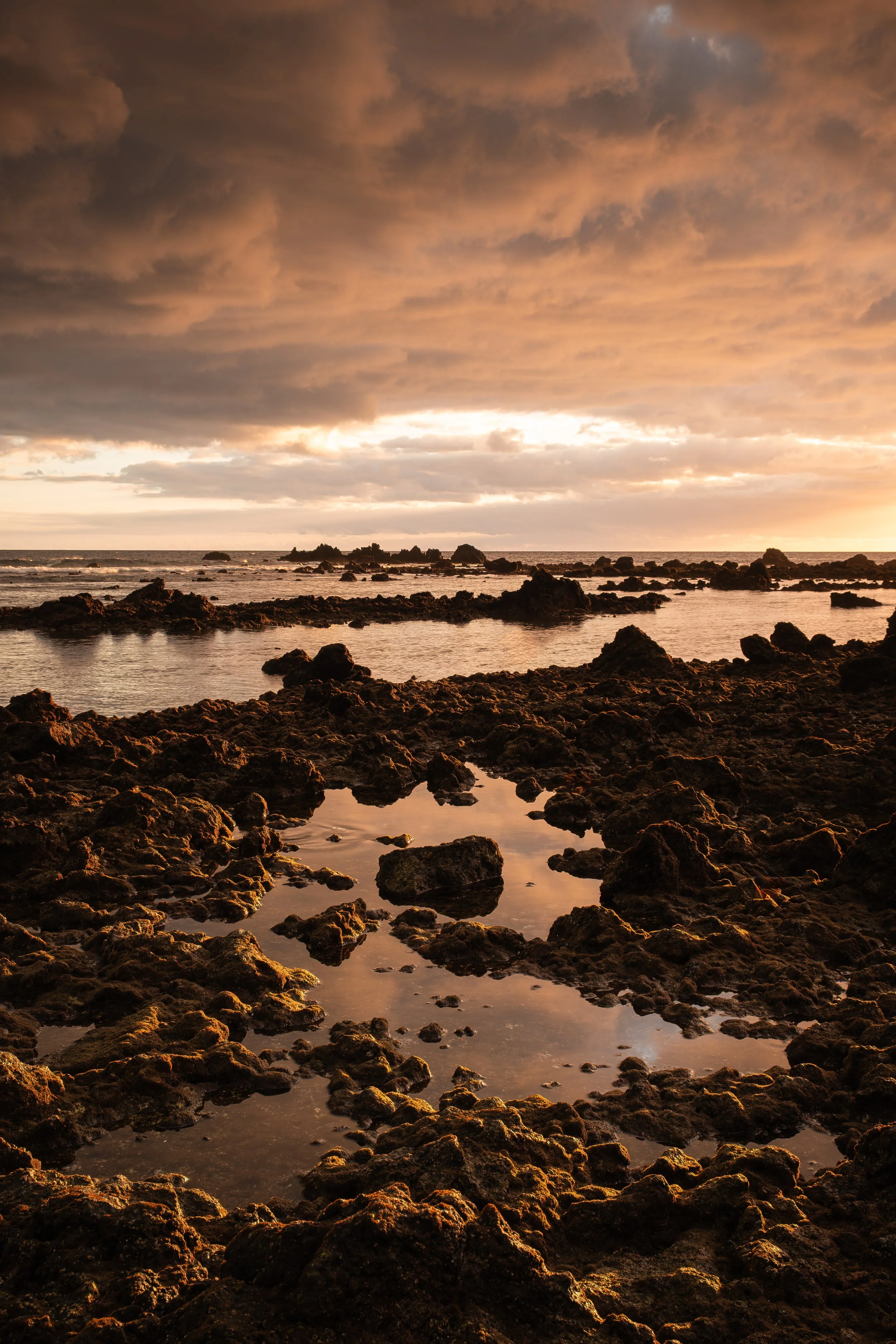
Apocalyptia
Apocalyptia
Seven days on Tenerife felt like being handed the keys to a completely different world, and I was determined to see every inch of it through my own lens. Between the iPhone always in my pocket, the Fujifilm ready for every burst of light, and the Mini 4 Pro scouting the island from above, it turned into a full creative takeover of the place.
This shot was from the very first evening—my introduction to what the island was capable of. The tide had pulled right back, exposing a maze of rock pools that caught the last light like tiny mirrors. Everything was glowing: molten gold on the stones, warm reflections in the water, and that heavy, dramatic sky closing in overhead. It felt apocalyptic in the best possible way—like the island was staging a show just for me.
And somehow, the night didn’t peak here. This was just the warm-up before Tenerife decided to turn everything up another notch in the days that followed.

A Shoreline Carved by Time
A Shoreline Carved by Time
By the time I reached this spot, I’d hiked as far along the coast as the terrain was willing to let me go. Every step felt like I was being nudged deeper into the island’s raw edges, and then—almost out of nowhere—the rocks bent into this perfect serpentine curve. It didn’t look designed, but it felt designed. A natural line leading straight out into the Atlantic, like the landscape was handing me a composition on a plate.
The sky started to shift while I was setting up. Those big, moody clouds thickened and stretched, building that slow-burn drama Tenerife does so well. The whole scene felt like it was tightening, getting ready for something. And then, right on cue, a single boat drifted into view—small, quiet, completely unfazed by the atmosphere around it. It was the final piece I didn’t know I needed.
So I held my shot, waited, breathed it out. Let the light do its thing. When the sun finally dipped low enough to graze the rocks, everything snapped together: the gold on the stone, the brooding clouds above, the tiny boat anchored in the vastness. It was one of those moments where the landscape, the light, and the timing all agreed to work with you.

The Land Before Time
The Land Before Time
I’d picked up the drone not long before flying out to Tenerife, and this trip was always going to be its first real test. Once the sun broke the horizon that morning, I sent it up, letting it climb above the coastline while the light was still soft and low.
What came back on the screen stopped me for a moment. The rocks below were catching the sunlight like they’d been brushed with gold, every ridge and fracture suddenly alive with colour. The water shifted from deep blue to bright turquoise as the waves rolled over the shallows, revealing the structure and texture beneath the surface. From above, the whole scene turned into this incredible patchwork of geometry—lines, shapes, and patterns that you’d never fully appreciate from the ground.
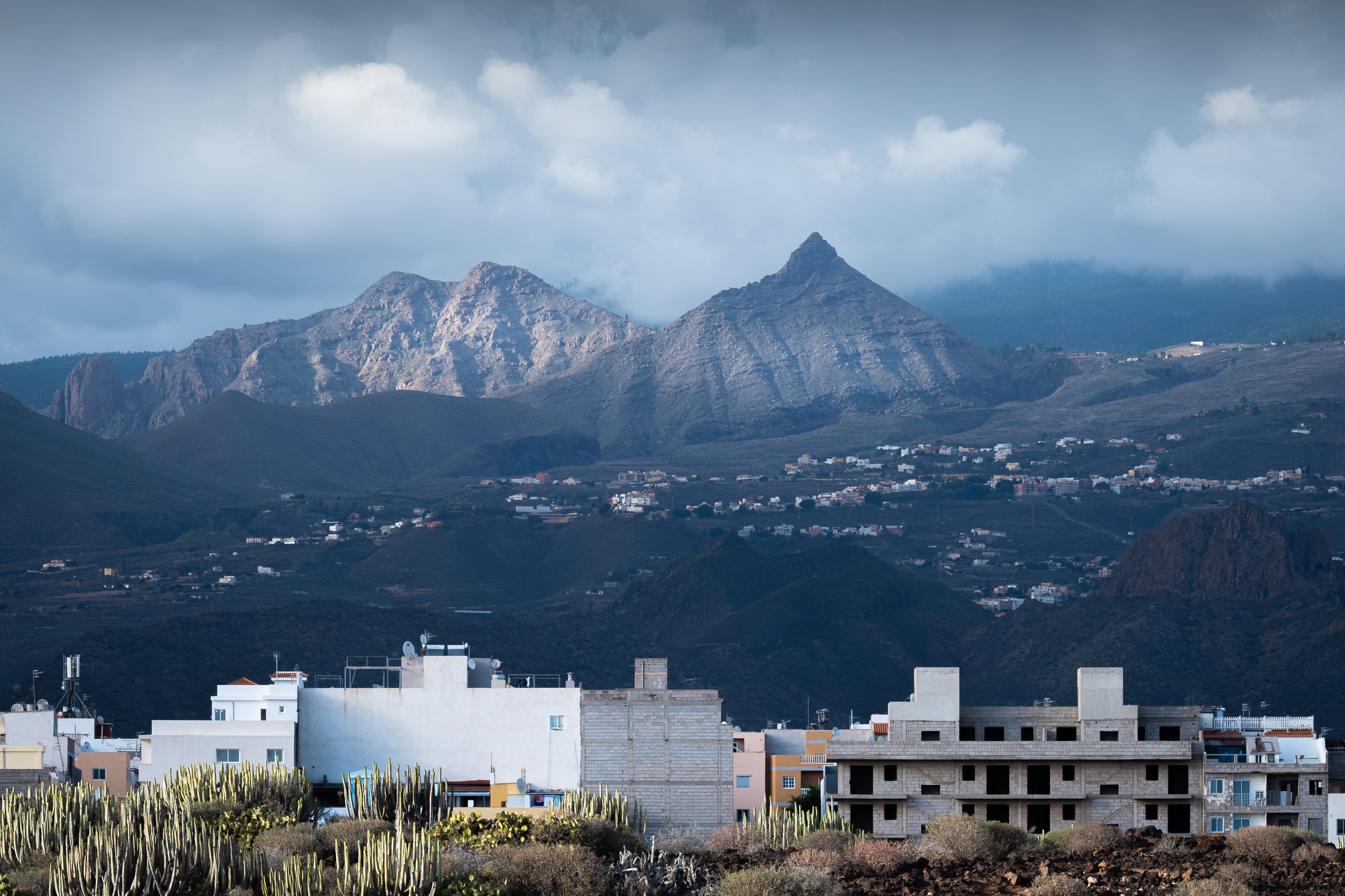
Under the Shadow of Giants
Under the Shadow of Giants
I shot this with the 100–400 because I wanted that heavy compression, that feeling where all the layers stack together and the mountains look way bigger and closer than they actually are. Framing it, I lined up the cacti in the foreground, the buildings in the middle, and the ridge lines in the back, knowing the telephoto would pull the whole scene tight.
Through the lens everything suddenly clicked—the peaks felt massive, the little houses scattered on the slopes looked like they were barely hanging on, and even the unfinished building became part of the landscape. And then the light shifted… that moody, cool-toned wash across the mountains with pockets of soft highlights. Honestly, that was the final touch that made the whole shot feel special.

Sunlit Giants of the Lava Field
Sunlit Giants of the Lava Field
I’d been wanting a shot that really summed up the landscape—something that pulled together the volcanic ground, the desert plants, and the mountains that define this part of Tenerife. With the sun setting behind me and Teide sitting crystal clear in front of me, this cactus instantly became the anchor I’d been looking for.
So I lined up its tall, finger-like arms right between the mountain and the fading light, letting that warm glow wrap around the edges. I just stood there for a moment, waiting for that perfect slice of golden light to hit—because when it did, everything clicked. The colours, the textures, the sense of place… it all came together in that one frame.

The Quiet Pull of the Tide
The Quiet Pull of the Tide
I was on my way to my planned sunset spot, chasing the light like usual, when I had to stop in my tracks. The receding waves had carved these incredible textures into the sand—delicate, flowing patterns that looked like the shore had been brushed by something far more intentional than the tide.
With the Lee Big Stopper on, my exposure stretched long enough to turn the anchored boats into soft, dreamy silhouettes drifting on stillness. Their gentle motion became part of the atmosphere rather than the subject, adding to the calm that hung over the water.
And above it all, those dark, moody skies rolled in—heavy, shifting, and full of character. It wasn’t the sunset I’d set out for, but it became the perfect moment: dramatic rocks, whispering sand textures, slow-blurred boats, and a sky that felt like it was about to tell its own story.

The Volcanic Rift
The Volcanic Rift
Standing there as the first light crept over the horizon, I couldn’t help but imagine what if—what if Teide was still active, what if the island still rumbled with the kind of raw power that shaped these rocks in the first place. The colours in the sky felt almost volcanic themselves: fiery reds, molten oranges, and deep, smouldering purples sweeping across the dawn.
That sunrise was explosive in every sense. The landscape lit up like a simmering caldera, and the pools of water caught the sky’s glow as if reflecting back fragments of an eruption. The volcanic crack running through the foreground pulled my eye straight into that thought—like a fault line from a time when the earth was alive and shifting.
Photographing and witnessing a scene like this unfold was such a joy. For a moment, with the heat of the colours and the stillness of the land, it felt like standing on the edge of something powerful and ancient. A sunrise that didn’t just rise… it erupted.

The Horizon Ignites
The Horizon Ignites
And then this happened.
The sky didn’t calm down after that volcanic dawn—you’d think the island had given everything it had already, but no. As the sun finally broke free of the horizon, the whole world shifted into this deep, molten glow. The ocean started to look like it was forged from the same fire you’d just imagined beneath Teide: every ripple catching the light like liquid metal, every wave edged with gold.
It felt less like sunrise and more like the aftershock of that imagined eruption—a final surge of heat bursting through the clouds, painting them with those insane reds and burnt oranges. The clouds, heavy and textured, looked like smoke drifting from some unseen crater, while the sun simmered just above the waterline as if it was cooling after the blast.
And standing there, watching this unfold, it hit me how seamlessly the island shifts moods. One moment you’re thinking about ancient eruptions and fault lines under your feet, and the next you’re staring out over an ocean glowing like it’s carrying the same fire forward.
It was the perfect continuation of that earlier moment—a second wave of drama, softer maybe, but no less powerful. A sunrise that didn’t just appear… it carried on the story, letting the sky and the sea finish the eruption in their own way.

Urban Geometry
Urban Geometry
As I wandered through the narrow streets of the old town, it was the light and the shapes that stopped me in my tracks. The sun broke through just long enough to cast sharp angles across the pastel walls, revealing textures I hadn’t noticed until that moment. Above it all, a brooding sky rolled slowly overhead, adding weight and mood to an otherwise ordinary scene.
There was something natural—almost instinctive—about lifting the camera. The contrast between soft, weathered facades and the heavy, storm-laden clouds created a balance I couldn’t ignore. It was one of those small, quiet moments where the geometry of the town and the drama of the sky worked together perfectly, making the photograph feel inevitable.
