

Photographing Snowdonia National Park Twenty-Twenty Five
A year later, Phillip returned to North Wales—this time with his friend Ryan—to chase the season of fire and gold. Autumn had transformed the landscape into something almost mythical once more. They began amid the explosive colours of Dinorwic, where the birches burned bright against slate and shadow, and every shift of light revealed a new palette of rust, amber, and flame.
From there, they wandered through time itself to the Penmachno Roman Bridge—a stone arc draped in moss and memory—where water whispered beneath and leaves fell like fleeting echoes of history.
As the day unfolded, the sky itself joined the performance. Over the mountains of North Wales, a fiery sunset ignited the horizon, painting peaks and clouds in molten hues that seemed almost unreal. But the weather, ever the artist, soon turned; by the time they reached Llyn Ogwen, the mood had shifted to one of rain, mist, and drama. The lake mirrored the brooding sky, and the mountains stood shrouded in cloud—mysterious, alive, and endlessly compelling.
Their journey ended where it all began: back at Dinorwic. As blue hour settled over the quarry, the last light clung to the stone and the air turned still once more. In that quiet, surrounded by echoes of the day and the hum of the land,

The Quiet Flame of Dinorwic
The Quiet Flame of Dinorwic
Ryan and I dedicated two full days to chasing the very heart of autumn across North Wales — that brief, golden window when the landscape burns brightest before winter’s hush. We began at Dinorwic Quarry under a sky undecided, the weather shifting between drizzle and sudden shafts of light.
The silver birch trees stood like quiet flames amid the slate and stone, their leaves turning a brilliant yellow that seemed to defy the greys around them. Between breaks in the clouds, the landscape would briefly come alive — every droplet of rain on a leaf catching the light, every colour deepened.
With my long lens, I tried to frame that fragile energy — the way the birch shimmered against the darker backdrop, the feeling that this moment was both fleeting and eternal. For hours we explored, waiting for that perfect alignment of light and calm.
By the end of the second day, soaked and exhilarated, we had captured what we came for: the essence of autumn in its peak — untamed, luminous, and heartbreakingly short-lived.

When the Quarry Burned with Colour
When the Quarry Burned with Colour
At first, it was just the yellow birch that held my gaze — a burst of gold standing defiant against the grey quarry wall, catching the last clean light of the day. It felt like a single voice raised in song, clear and bright amid the stillness.
But stepping back, the story deepened. The quarry, scarred and silent, was alive with a quiet fire — greens softening into ochres, bronze shrubs gathering around fallen stone, shadows deepening where slate met soil. The light didn’t belong to one tree anymore; it moved across the scene like a slow tide, uniting the living and the broken in a shared moment of grace.

Beneath the Old Roman Bridge
Beneath the Old Roman Bridge
Finding this bridge was like searching for a needle in a haystack — hidden deep within the folds of woodland, where paths faded and silence grew thick. Yet when we finally stumbled upon it, the sight felt almost otherworldly, as if we’d stepped into a scene from Tolkien’s Middle-earth. The arch of stone, draped in long, delicate reeds, whispered of forgotten centuries, while the jet-black waters beneath mirrored the world above with an almost magical stillness. Golden flecks of autumn leaves clung to moss-covered rock, catching the soft light like embers in the undergrowth.
As I took my time to compose the frame, it felt less like a photograph and more like uncovering a secret — a quiet fragment of history suspended in nature’s embrace.

Through the Heart of Eryri
Through the Heart of Eryri
As Ryan and I were photographing the Penmachno Roman Bridge, faint hues began to gather in the clouds above — soft pinks and golds brushing through the grey. We noticed the light, but thought little of it, absorbed in the quiet rhythm of the river and the timeless curve of the bridge. It wasn’t until we started making our way back that the sky transformed — the colours ignited, and a beam of light carved its way through the valley ahead.
Suddenly, the landscape came alive. The mountains glowed in fiery tones, and the forests below seemed to breathe under the warmth of the evening sun. We dropped everything, rushing to capture it — hearts racing, cameras clicking, the world burning with light and life.
It was one of those rare, fleeting moments — a reminder of how nature rewards patience and chance in equal measure. The day ended not in stillness, but in exhilaration, as Eryri revealed one last gift before nightfall.
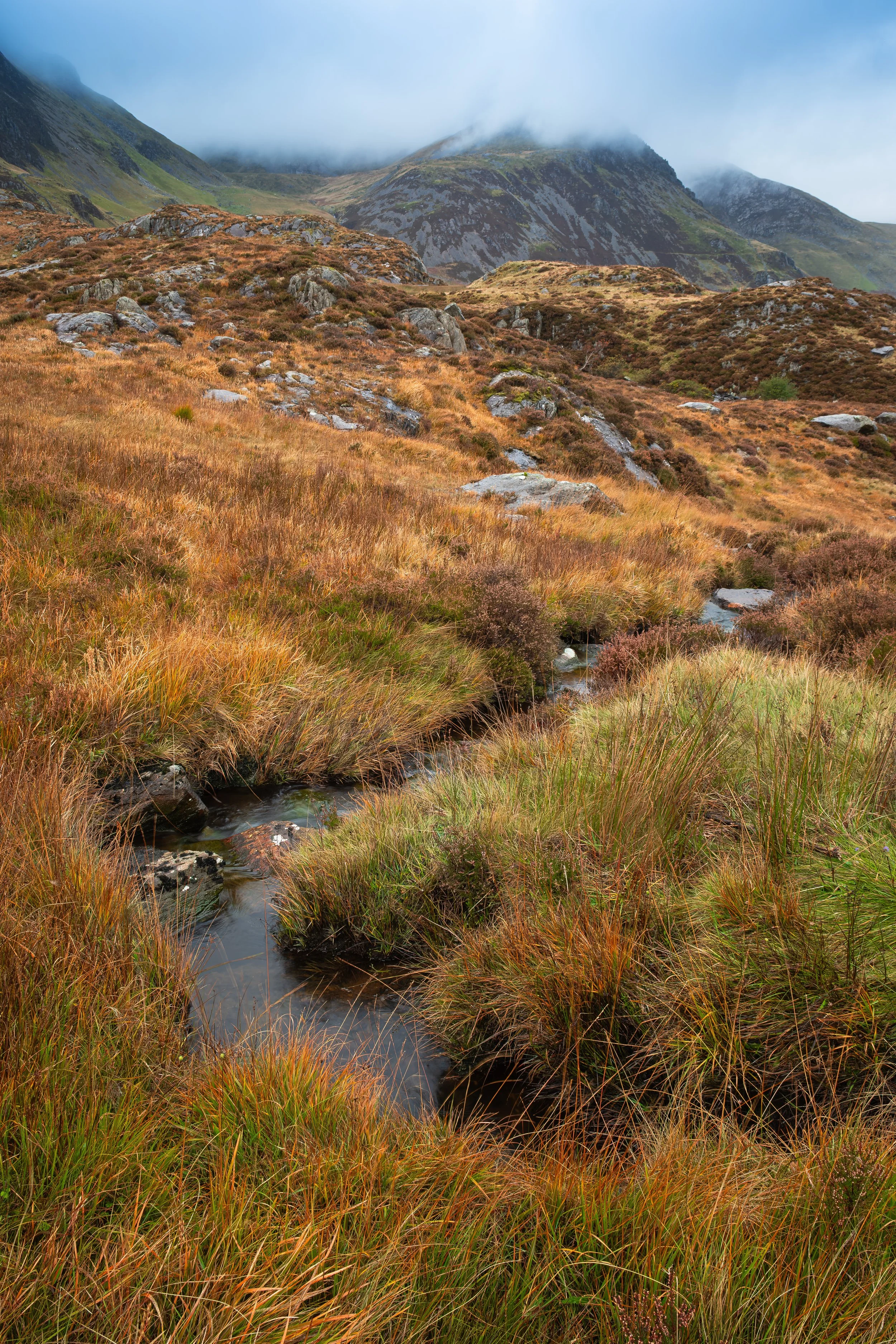
Cwm Idwal — Where Weather Rules All
Cwm Idwal — Where Weather Rules All
I was completely in my element here—surrounded by mountains steeped in mood and mystery. The air was heavy with rain, and the sky churned with drama, rolling clouds clinging to the peaks. The ground beneath my feet was sodden, every step sinking slightly into the saturated earth, yet the landscape glowed with vibrant orange tones that stood defiantly against the dark, brooding skies above.
Armed with a wide-angle lens, I wandered slowly through the scene, drawn to the winding streams and tufts of grass that painted the valley floor. Every composition felt like a small discovery.
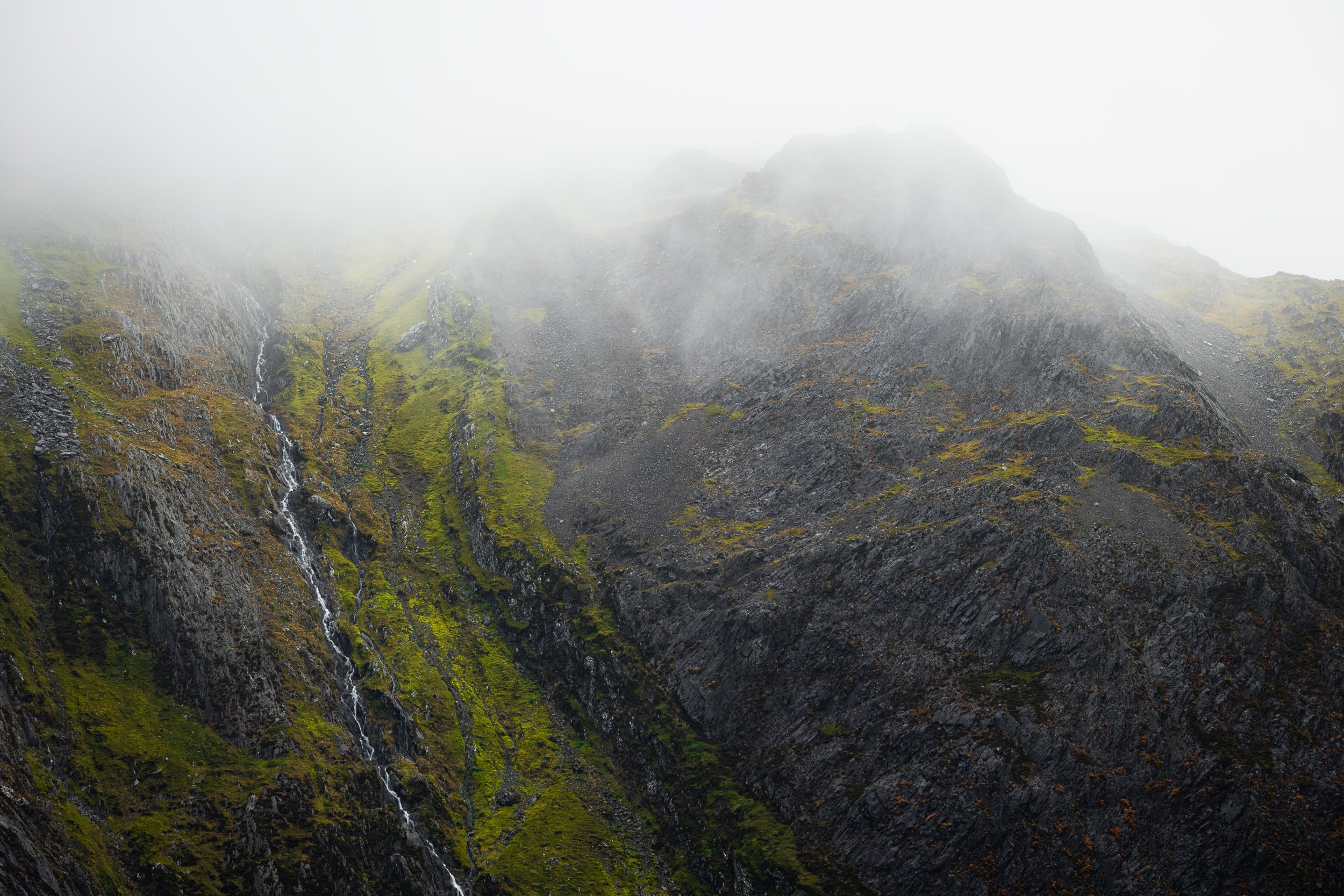
The Spine of the Mountain
The Spine of the Mountain
I was completely in my element here—surrounded by mountains steeped in mood and mystery. The air was heavy with rain, and the sky churned with drama, rolling clouds clinging to the peaks. The ground beneath my feet was sodden, every step sinking slightly into the saturated earth, yet the landscape glowed with vibrant orange tones that stood defiantly against the dark, brooding skies above.
As the mist began to drift lower, I found myself drawn upward—toward this ridge where the mountain’s spine revealed itself in streaks of green and black. A waterfall tumbled through the rock face, carving its way through centuries of stone, a silver thread cutting through the gloom. The light was fleeting, soft, and ethereal—each wisp of fog catching it for just a moment before swallowing it whole.
There was something raw and elemental about it, almost otherworldly. The textures, the colours, the atmosphere—it felt like stepping into a piece of Iceland, wild and untouched. In that solitude, surrounded by nothing but rock, rain, and rhythm, I felt both small and completely alive.

Where Autumn Weaves Its Web
Where Autumn Weaves Its Web
It was absolutely chucking it down with rain, the kind that makes you quickly look for any bit of shelter you can find. I ended up standing under this thick canopy of autumn colour, a blanket of gold and yellow leaves offering just enough cover to keep the camera dry.
As I looked up, the branches twisted and crossed over each other like veins or spines, creating this incredible web of shapes and texture. The rain kept falling, softening the light and deepening the colours, and it gave me the perfect chance to photograph something a little more abstract — a moment of calm and creativity in the middle of a downpour.
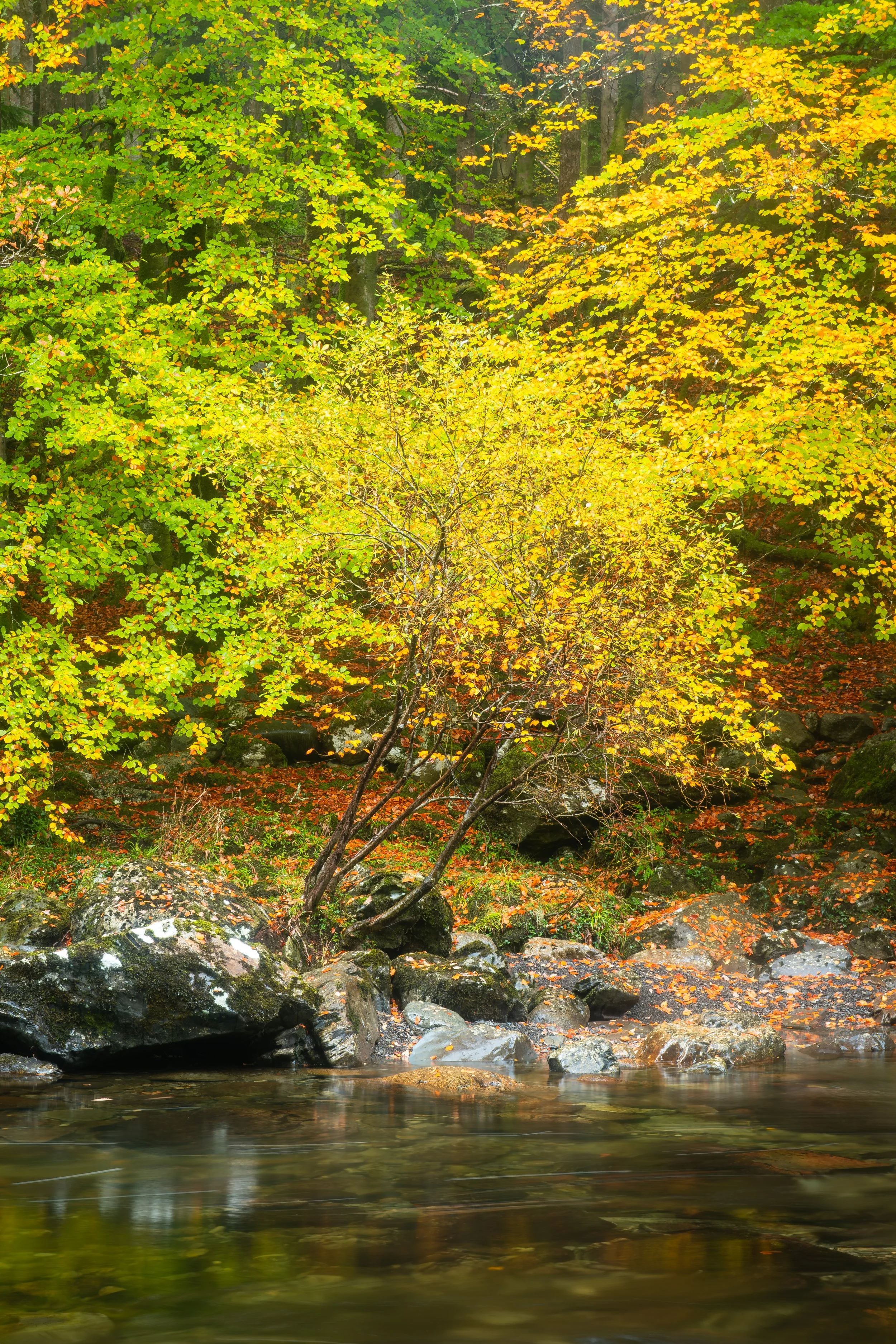
Embers of the Woodland
